Analysis
AI explainers in AI Mode ads: what 161 real ones show
Google calls the AI-written line above AI Mode ads an AI explainer. We read all 161 in our Oct 2026 capture: how they open, what they promise, what to do.
By the AI Mode Ad Library team · Published · Updated · 8 min read
In short
- Google’s help page now calls the Gemini-written text that can come with AI Mode ads an AI explainer; in October we called it the lead-in sentence.
- Advertisers “can’t manually write, edit, approve, or opt out of” AI explainers, Google says, and some ads show with a static header such as “You might consider these options” instead.
- Of the 197 answers with ads in our Oct 10–11, 2026 capture, 161 had an explainer written for the question, 24 a static header and 12 neither that we could read.
- Written explainers ran 10 to 23 words, median 16, and no two were alike. Most opened with a goal (“To get…”, “To find…”) or a plain offer (“Here are…”).
- Explainers above text ads talked about quotes, comparing and official sites; those above product rows named models, sizes and materials. 14 presented the ads as an alternative, which matters most when the search was for your own brand.
On this page · 10 sections
What Google calls an AI explainer
In an AI Mode answer with ads, the ads don’t follow the answer cold. Under the “Sponsored” label there is usually a sentence that hands the reader over: “To find a reliable dog walker, you can explore these services.” on dog walker, followed by ads from Rover and Wag Walking. When we built the library in October we called this the lead-in sentence. Google’s help page for advertisers now names it the AI explainer, so this guide uses Google’s term. We keep the explainer with every ad in the library.
“In some placements across AI surfaces, ads may also appear with AI explainers, which are concise, independent text generated by Google’s Gemini models to help people understand how an ad or group of ads relates to what they’re looking for.”
Depending on the layout, the page says, an AI explainer may introduce a group of Sponsored options with a brief description, or highlight useful context alongside an ad “using information from the user’s query, the AI response, and publicly available sources including your website.” The 161 explainers in our capture all sat in the same place, under the “Sponsored” label and above the ads they introduced. Our capture recorded one such line per answer, so it can’t show whether the second kind, context beside a single ad, also appeared.
The next paragraph on the page sets the rules for advertisers:
“AI explainers aren’t part of ad headlines or descriptions. Unlike creative assets, advertisers can’t manually write, edit, approve, or opt out of them, and we design these placements so users can distinguish AI-generated context from ad copy. In some cases, ads may show with a static section header instead (for example, ‘You might consider these options’).”
Google’s example of a static header is word for word one of the two stock lines we recorded, “You might consider these options:”. And the written explainers behave as Google describes: each was written for its question, and no two of the 161 were the same.
| What sat under “Sponsored” | Text-ad answers | Product answers | Both | Total |
|---|---|---|---|---|
| An AI explainer written for the question | 99 | 59 | 3 | 161 |
| A static header (stock line) | 9 | 15 | 0 | 24 |
| Nothing we could read | 0 | 12 | 0 | 12 |
How the explainers are built
The written explainers were short and plain: 10 to 23 words, median 16, and every one ended with a full stop, where the stock lines end with a colon. 122 of the 161 reused at least one word from the search. The verbs were soft suggestions: “explore” appeared in 48 explainers, “consider” or “considering” in 33 and “find” in 31. Seven openings covered most of them.
| Opening | Explainers | Example |
|---|---|---|
| “To get…” | 28 | “To get a quote for a non-owner SR-22 policy, you can explore these providers.” (non owner sr22) |
| “Here are…” | 24 | “Here are some options for the men’s Brooks Ghost 17.” (brooks ghost 17) |
| “You can…” | 22 | “You can book your rental car directly with Enterprise or compare deals from different providers.” (enterprise car rental) |
| “If you’re…” | 16 | “If you’re looking for other reputation management platforms, here’s an alternative to consider.” (birdeye) |
| “To find…” | 15 | “To find a reliable dog walker, you can explore these services.” (dog walker) |
| “To help…” | 12 | “To help you compare different CRM systems, here are some options to explore.” (top crm platforms) |
| “For a…” | 9 | “For a physical way to collect reviews, consider these cards and plates with NFC and QR codes.” (google review tool) |
The explainer also counted the ads. When an answer had one text ad, it often said so in the singular: “here’s an alternative to consider”, “you can explore this option from Worth Ave. Group”. With two text ads, 32 of the 60 explainers used “these”, as in “these options” or “these services”, and only a few stayed singular, such as “you can use an AI-powered planning tool” on road trip planner.
Text ads and product rows get different explainers
| Word in the explainer | Above text ads (99) | Above product rows (59) |
|---|---|---|
| compare | 18 | 2 |
| quote or quotes | 11 | 0 |
| official | 15 | 0 |
| local, near or area | 10 | 1 |
| consider or considering | 14 | 18 |
| here | 16 | 48 |
Above text ads, the explainer set up a task: get a quote, compare rates, book on the official site, find a local professional. Above product rows, it described the row. It named sizes and materials (“in materials like aluminum, stainless steel, and cast iron” on camp cookware), product types (“single-stage, two-stage, and hybrid models” on toro snow blower) and specific models (“including the TurboBlaze 6.0-Quart” on cosori air fryer). Three explainers said the ads were for products or platforms “mentioned” in the answer: above product rows on eufy doorbell and indoor camera, and above text ads on drip campaign software.
Six kinds of AI explainer
| Kind | Example | What it asks of the ad |
|---|---|---|
| Goal first | “To get a personalized quote based on your specific details, you can compare rates from different insurance companies.” (car insurance quotes) | A quote or comparison as the first thing on the landing page |
| Alternative | “If you’d like to compare rates from other lenders, here’s an option to consider.” (lightstream loan, ad from Upstart) | A clear reason to switch; the searched brand had no ad |
| Official site | “You can check availability, browse suites, or book your stay on the official site.” (four seasons vegas) | A brand ad that goes straight to booking or buying |
| Local help | “To get professional help with the installation of a new AC unit, you can connect with local installers.” (new ac unit) | A service area and a quick way to request a visit |
| Do it for me | “If you decide to have a professional handle the job instead of doing it yourself, you can explore these brake service options.” (brake job) | A service offer that follows DIY advice in the answer |
| Row intro | “Here are some options for the Boston clog, including the Soft Footbed version.” (birkenstock boston) | Listings that match the model the AI names |
Two kinds deserve attention. “Official site” explainers, counted by the word “official”, appeared 15 times, all above text ads and mostly on searches for the advertiser’s own brand or product, such as autodesk maya and gelato print. Alternative framing appeared in 14 explainers, such as “For other flexible workspace options, you can explore these providers.” on deskpass. On a rival’s brand search that framing works for the challenger: on birdeye the only ad was SOCi, introduced as “an alternative to consider”.
Static headers and missing explainers
In 24 answers Google used one of two fixed lines instead of writing an explainer. “You might consider these related products:” sat above 15 product rows, including pura diffuser and writing desk. “You might consider these options:” sat above 9 text-ad answers, including concur alternatives and thimble insurance; it is the example of a static section header that Google’s help page gives. We keep these lines but don’t count them as the AI’s own words.
12 answers, all product rows, had no line we could read, among them window ac unit and women’s winter boots. Some may still be hidden by the product carousel: we recovered the sentence for 36 answers on a second reading.
AI explainers in Google’s newer formats
Two of Google’s newer AI Mode formats put the explainer inside the ad. Conversational Discovery ads and Highlighted Answers, which Google announced as tests on May 20, 2026, “will feature an independent AI explainer as part of the ad”: its Gemini model “evaluates and synthesizes information about a product or service, and displays that context alongside the advertiser’s creative.” Explainers also introduce newer placements. Screenshots Glenn Gabe posted on Nov 12, 2026 showed a sponsored pack of products under an AI Mode answer, introduced with “If you’re exploring these walking models, here are some options available from local retailers.” The ad formats guide lists these formats and tests, and how ads work in AI Mode gives the overview.
What advertisers can do about it
- Read the explainer for your searches. You can’t edit it, but you can predict it. Every ad in the library keeps its explainer, and each industry report exports them as a CSV.
- Keep your website clear and current. Google says an explainer can draw on “publicly available sources including your website”, and that keeping website content clear and up to date “helps Google surface accurate context in AI explainers”.
- Deliver the promised step in your first headline. After “To find a reliable dog walker, you can explore these services”, Rover’s headline opened with “Rover: Dog Walkers - Affordable 5-Star Dog Walkers”.
- Bid on your own brand. 15 explainers used the word “official”, 14 of them for an official site or store, almost always above the brand’s own ad. When a brand didn’t advertise, the explainer could introduce a rival as the alternative instead.
- Keep product titles specific. Explainers above product rows name models and versions taken from the answer. A listing titled with the exact model is the one that matches.
- Test your copy under a real explainer. The ad preview shows your headline beneath an AI Mode explainer, and the ad copy guide covers headlines in more depth.
Examples from the library
4 of the ads on searches this guide links to, in our capture (Oct 10–11, 2026, US searches). Each card shows the search that brought it.
“To find a reliable dog walker, you can explore these services.”
 Rover.comSponsored
Rover: Dog Walkers - Affordable 5-Star Dog Walkers - Find Your Dog's Walker
Worried about your dog when you're away? Go stress-free by booking a dog walker on Rover.
Searched for
PetsOct 10, 2026“To get a quote for a non-owner SR-22 policy, you can explore these providers.”
 Dairyland® InsuranceSponsored
SR 22s: Easy and Free - Low Payments Fit Your Budget - Get a Free Quote Now
Get a free quote from Dairyland® on coverage that fits your needs. Call today!
Searched for
InsuranceOct 10, 2026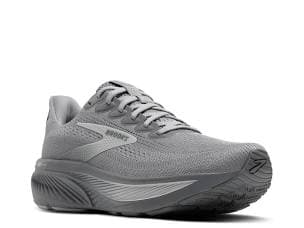 $109.96Product
Brooks Ghost 17 Running Shoe | Men's | Grey | Size 8 | Sneakers
Searched for
Fashion & FootwearOct 11, 2026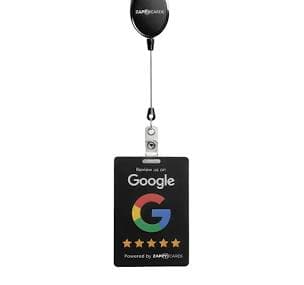 $30.00Product
Wearable Google Review Card - Collect Reviews Instantly - NFC & QR Code - ZappyCards
Searched for
Small Business ToolsOct 10, 2026
Questions and answers
What is an AI explainer in Google AI Mode ads?
Google’s name for the short text its Gemini models write to show how an ad or group of ads relates to a search. In AI Mode it usually sits under the “Sponsored” label, above the ads. In our Oct 10–11, 2026 capture, 161 of the 197 answers with ads had one written for the question.
Is an AI explainer the same as the lead-in sentence?
Yes. We called it the lead-in sentence when we built the library in October 2026; Google’s help page now calls it an AI explainer. The counts in this guide are the same under either name.
Can advertisers edit or turn off AI explainers?
No. Google’s help page says advertisers “can’t manually write, edit, approve, or opt out of them”. Text guidelines in Google Ads apply to assets made with text customization, and Google says explainers aren’t part of ad headlines or descriptions.
Does every AI Mode answer with ads have an AI explainer?
No. In our capture, 161 had an explainer written for the question, 24 a static header such as “You might consider these options:” and 12, all product rows, had neither that we could read.
Does an AI explainer ever name a brand?
Yes. About 30 of the 161 written explainers named an advertiser on that answer, for example “If you’re interested in Oregon State University, here’s more about their online computer science program.” Most were searches that already named the brand.
Sources
- About ads in AI-powered experiences in Google Search – Google Ads Helpsupport.google.com
- A new generation of ads for the AI era of Searchblog.google · May 20, 2026
- Use text guidelines with Performance Max and Search campaigns (beta) – Google Ads Helpsupport.google.com
- Google AI Mode gains local retailer ads after Search growth slows to 12% – PPC Landppc.land · Nov 12, 2026
Figures from the library are in our capture (Oct 10–11, 2026, US searches) and describe what we observed, not Google’s full ad inventory. AI Mode Ad Library is independent and not affiliated with Google.