Comparison
AI Mode vs AI Overviews ads: how they differ
Ads in AI Mode and around AI Overviews compared: 2,036 vs 1,917 ads in our Oct 2026 US capture, plus Google’s rules on eligibility, countries and reporting.
By the AI Mode Ad Library team · Published · Updated · 10 min read
In short
- One Google help page now covers both surfaces, and the same campaigns feed them: existing Search, Shopping and Performance Max campaigns are eligible automatically, with no new campaign or separate budget.
- Where they run differs: as of Nov 16, 2026, Google lists ads within AI Mode in English in 11 countries and within AI Overviews in 12 (Indonesia is AI Overviews only), while ads above and below an AI Overview run wherever AI Overviews do.
- In the ad capture of each library, searches run in a browser, where the ads on the page are recorded, 196 of 341 AI Mode searches (57%) and 111 of 149 AI Overview searches (74%) showed ads (Oct 10–11, 2026, US).
- Full-sentence questions ran only in each library’s answer capture, a second set of searches that recorded the AI answer and the sources it linked, but picked up ads on few of them (2 of 323 in AI Mode, 29 of 379 around AI Overviews), so their ad rate was not measured on either surface.
- In our capture an AI Mode answer held at most two text ads, introduced by a sentence from Google’s AI; a results page with an AI Overview held up to nine, above and below it.
On this page · 8 sections
The official rules, side by side
AI Overviews are the AI summaries Google places on some ordinary results pages. AI Mode is a separate, conversational way to search, which Google says is most useful for questions where “further exploration, reasoning, or complex comparisons are needed”. Google’s Search Central documentation says both may use a “query fan-out” technique, running related searches across subtopics before writing the answer.
There is no campaign type for either surface: ads reach them from campaigns you already run. One Google Ads help page, “About ads in AI-powered experiences in Google Search”, now covers both, and Google’s older AI Overviews ads page redirects to it. It says existing Search, Shopping and Performance Max campaigns are automatically eligible, and that ads can appear “directly within or alongside these AI-generated responses (including across follow-up questions in AI Mode)”. Google matches an ad either directly to a query that already shows clear commercial intent or contextually to the query and the AI response together, when someone asks a longer, exploratory question.
| AI Overviews | AI Mode | |
|---|---|---|
| Where ads appear | Within or alongside the AI Overview; standard ads can also appear above or below it | Within or alongside the response, including on follow-up questions (multiturn ads, US) |
| Countries and languages | Within: English, in 12 countries. Above or below: all 200+ countries and territories, in all languages, where AI Overviews are available | English, in 11 countries: the US, Australia, Canada, India, Kenya, Malaysia, New Zealand, Nigeria, Pakistan (text ads only), the Philippines and Singapore |
| Campaigns | Existing Search, Shopping and Performance Max campaigns, automatically | The same |
| Matching | Broad match, AI Max, Shopping and Performance Max: to the query, or to the query and the AI response. Exact and phrase match: only queries with direct commercial intent | The same |
| Formats | Text and Shopping ads; Google is experimenting with local inventory ads and vehicle ads | The same, plus a Direct Offers pilot and tests of Conversational Discovery ads and Highlighted Answers |
| Sensitive categories | All Google Ads policies apply. Google is testing ads for certain pharmaceutical products, including prescription drugs (US, from October 2026) | The same, plus a small test of healthcare ads for US English queries (first reported June 1, 2026) |
| Opt out, or target only this placement | Not possible | Not possible |
| Reporting | Included in aggregate in standard campaign reports and the search terms report; no separate segment described | The same |
Several 2026 changes widen the route into AI Mode. In January 2026 Google began a Direct Offers pilot that shows advertisers’ deals to shoppers in AI Mode. On May 20, 2026 it said it is testing two new AI Mode formats, Conversational Discovery ads and Highlighted Answers, both to stay labelled “Sponsored”, with AI Max for Search, AI Max for Shopping and Performance Max as their foundation; the same post said Direct Offers “will now naturally surface in the AI Mode response”. In a LinkedIn reply first reported on June 1, 2026, Google’s Ads Liaison confirmed a small test of healthcare ads in AI Mode (US, English queries). In September 2026 she confirmed a “small experiment” in which exact and phrase match keywords can serve text ads in AI Mode, “limited to cases where there is explicit and direct user intent”; the help page now states that match-type rule for both surfaces. The rest are pilots and tests, so treat the details as likely to move.
On Oct 28, 2026 Google expanded ads in AI Mode beyond the US to Australia, Canada, India, Kenya, Malaysia, New Zealand, Nigeria, Pakistan, the Philippines and Singapore, and announced multiturn ads in the US, which let ads appear on follow-up questions in an AI Mode conversation; Search Engine Roundtable reported on Nov 9 that it had seen them live on Nov 6. On Google’s current list, Indonesia is the one country where ads run within AI Overviews but not within AI Mode.
What our two libraries show
We run the same kind of capture on both surfaces: signed-out Google searches from United States connections, saved as they appeared. This library records ads in AI Mode; our sister AI Overview Ad Library records ads on results pages with an AI Overview. Both editions ran on Oct 10–11, 2026, on overlapping but not identical question lists.
Each edition has two parts. The ad capture is searches run in a browser, where the ads on the page are recorded; on both surfaces it ran short product and keyword searches only. The answer capture is a second set of searches that recorded the AI answer and the sources it linked, but picked up ads on few of them (2 of 323 in AI Mode, 29 of 379 around AI Overviews). Every ad rate below comes from the ad capture.
| Measure | AI Mode | Around AI Overviews |
|---|---|---|
| Searches in the ad capture | 341 | 149 |
| Ad-capture searches with ads | 196 (57%) | 111 (74%) |
| Searches in the answer capture | 323 | 379 |
| Answer-capture searches where ads were picked up | 2 | 29 |
| Ads recorded, both captures | 2,036 | 1,917 |
| Advertisers, both captures | 678 | 691 |
| Product listings / text ads in the ad capture | 91% / 9% | 86% / 14% |
| Ads per ad-capture search whose ads we recorded (average, median) | 10.4, 2 | 16.0, 7 |
| Most text ads on one answer or page | 2 | 9 |
In the ad capture, more searches showed ads around AI Overviews (111 of 149, 74%) than in AI Mode (196 of 341, 57%). The two lists of searches overlap but are not the same, so the closer comparison is the 113 questions that ran in the ad capture on both surfaces: 62 showed ads in AI Mode and 83 around the AI Overview.
Full-sentence questions, such as comparisons, “is it worth it” questions, price questions and multi-sentence scenarios, are the gap in this edition. They ran only in the answer capture on both surfaces, so their ad rate was not measured. In AI Mode that capture picked up ads on two of them: how to track phone calls from ads, with text ads from PowerAnswer and RedTrack, and best online computer science bachelor’s, with one from Oregon State University. Google says the average AI Mode search is three times the length of a traditional search, so long questions are the part of AI Mode these numbers say least about. More figures are on the statistics page.
The format mix differs too. In the ad capture, product listings were 91% of AI Mode ads, usually in blocks of a dozen or more, while text ads came one or two at a time. Around AI Overviews text ads were a larger share, 14%, and one page could carry several above the overview and more below it. 208 advertisers appeared in both libraries.
Same question, different ads
113 questions ran in the ad capture on both surfaces. 62 showed ads in AI Mode, 83 showed ads around the AI Overview, 52 showed ads on both and 20 on neither. On 51 of the 52 we could read the ads on both sides, and on 41 of those the two line-ups shared at least one advertiser, usually a store inside a product block: on dog boots, 20 stores were in both. Where the ads were text ads, the names often changed completely.
| Question | Advertisers in AI Mode | Advertisers around the AI Overview |
|---|---|---|
| top crm platforms | Kustomer, monday.com | Forbes, Salesforce (both below) |
| nessus professional | NinjaOne, CDW | Automox (above and below), Invicti (above) |
| arm mortgage rates | LendingTree, Provident Bank | Rocket Mortgage, Forbes, Angel Oak (all below) |
| concur alternatives | Ramp, Rippling | Rippling (above); Ramp and Navan (below) |
| custom hoodies | 39 product listings from print shops, led by RushOrderTees and Custom Ink | Two RushOrderTees text ads |
| hot air brush | One text ad, for a Chicago Tribune review page | 34 product listings from stores including Ulta Beauty, Sally Beauty and Target |
Each of these questions was searched once in the ad capture on each surface, sometimes hours apart, so an advertiser missing from one side may simply have lost that auction. The practical point stands: the businesses inside an AI Mode answer can be a different set from those on the results page for the same words, and the format can flip from product cards to a single text ad.
How each surface presents its ads
In AI Mode the ads sit under a “Sponsored” label, and Google’s AI usually writes a sentence leading into them, which Google’s help page calls an AI explainer. In 161 of the 197 AI Mode answers with ads the sentence was written for the question, such as “To help you compare different CRM systems, here are some options to explore.” on top crm platforms; 24 used a stock line such as “You might consider these options:”, which the help page describes as a static section header shown instead of an AI explainer, and 12 had none we could read. The help page says AI explainers can appear in some placements across AI surfaces, but around AI Overviews our sister library records no such sentence, only whether each ad came above or below the overview. Of the AI Overview ads in the ad capture that we could place, 70% came before the start of the overview and 30% after it; that edition does not record ads inside the overview as a separate position.
Finance and insurance ads were spread differently too. In AI Mode we recorded 35 personal finance and insurance ads on 21 answers; around AI Overviews we recorded 32 on 11 pages, all above, below or not placed. The details are in finance and insurance ads in AI Mode.
What to do about the difference
- Plan one campaign set for two placements. Neither surface has its own campaign type, targeting or opt-out, so the same feeds, ads, bids and budgets serve both. Changes you make for one will reach the other.
- Check how your keywords can match. Standard ads can still appear above or below an AI Overview, as elsewhere on the results page. Within AI Overviews and AI Mode, broad match, AI Max, Shopping and Performance Max can match both direct queries and longer questions through the AI’s response, while exact and phrase match keywords qualify only when the query itself shows direct commercial intent.
- Write text ads that read well after the AI’s sentence. In our capture you competed for at most two text slots in an AI Mode answer, directly after a line such as “If you’re looking for other options…”. See AI Mode ad copy patterns.
- Keep product data complete. Product listings were most of the ads on both surfaces. Google’s help page asks Shopping advertisers to keep Merchant Center feeds complete and fresh, with descriptive titles and descriptions, accurate prices and sale prices, and clear shipping and return policies.
- Search your own long questions on both. Comparisons, “is it worth it” questions and other full-sentence questions ran only in the answer capture of each library, so their ad rate was not measured on either surface. Check the ones that matter to you before assuming either way.
- Plan without a placement report. Google’s help page says results for ads in AI Overviews and AI Mode are included in aggregate in your standard campaign reports and search terms report, and it describes no separate segment for either. Measuring AI Mode ads covers the reports that do help.
- Check your brand on both surfaces. Search it in our brand check and in the one on the AI Overview Ad Library; each library sends its own alerts when it publishes a new edition.
Examples from the library
4 of the ads on searches this guide links to, in our capture (Oct 10–11, 2026, US searches). Each card shows the search that brought it.
 poweranswer.comSponsored
Google Ads Call Tracking - Track Calls From Google Ads - Start Your Free Trial
Track calls from Google Ads and know exactly which campaigns are driving your phone calls.
Searched for
Business SoftwareOct 10, 2026“If you're interested in Oregon State University, here's more about their online computer science program.”
Oregon State UniversitySponsoredComputer science bachelor's - Online CS degree - Quality online programs
Get rigorous training from a top engineering university with strong industry connections.
Searched for
Education & CareersOct 10, 2026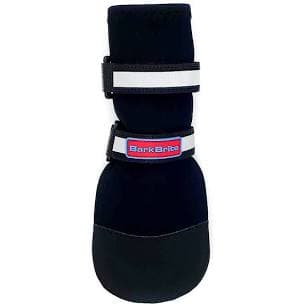 $31.99Product
 $8.03Product
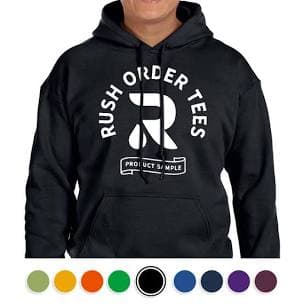
Custom Gildan Heavy Blend Hoodie in Black Size Large Cotton/Polyester | RushOrderTees | Sample
Searched for
Small Business ToolsOct 10, 2026


Questions and answers
Are AI Mode ads the same as AI Overview ads?
Not quite. One set of campaigns feeds both, and one Google help page covers both, but the placements differ: on a results page ads can sit within the AI Overview or above and below it, while in AI Mode they sit within or alongside the conversational reply and, in the US, can also appear on follow-up questions. 208 advertisers appeared on both in our Oct 10–11, 2026 capture.
Can I target only AI Mode or only AI Overviews?
No. Google’s help page says you can’t target ads exclusively to AI Overviews or AI Mode, or opt out of showing ads in them separately from Search. Negative keywords and brand exclusions still apply, and whether an ad shows depends on the campaign type, its matching and the auction.
Which surface shows more ads?
Results pages with an AI Overview, going by the ad capture of each library: 111 of 149 searches there showed ads (74%), against 196 of 341 in AI Mode (57%). Those pages also carried more ads each (16.0 on average against 10.4) and a larger share of text ads (14% against 9%).
Do finance ads appear in AI Mode?
Yes. We recorded 35 personal finance and insurance ads on 21 AI Mode answers. Around AI Overviews we recorded 32 on 11 pages; those we could place came before or after the start of the overview, and that edition does not record an inside position separately.
Sources
- About ads in AI-powered experiences in Google Search – Google Ads Helpsupport.google.com
- Ads in AI Mode expand to new marketsblog.google · Oct 28, 2026
- Google AI Mode Multiturn Ads Are Live - Follow-Up Query Ads – Search Engine Roundtableseroundtable.com · Nov 9, 2026
- Google Opens AI Mode to Prescription Drug Ads – Adweekadweek.com · Oct 12, 2026
- More opportunities for your business on Google Searchblog.google · May 21, 2025
- Google Ads highlights of 2025 – Google Ads Helpsupport.google.com · Dec 8, 2025
- A new generation of ads for the AI era of Searchblog.google · May 20, 2026
- Google Begins Limited Test Of Healthcare Ads In AI Mode – Search Engine Roundtableseroundtable.com · Jun 1, 2026
- Google Ads Tests Serving Search Ads With Restrictive Match Types In AI Mode – Search Engine Roundtableseroundtable.com · Sep 4, 2026
- AI features and your website – Google Search Centraldevelopers.google.com · Dec 10, 2025
- How AI Mode is changing the way people search in the U.S.blog.google · May 19, 2026
Figures from the library are in our capture (Oct 10–11, 2026, US searches) and describe what we observed, not Google’s full ad inventory. AI Mode Ad Library is independent and not affiliated with Google.