Data study
AI Mode ads by industry: 20 industries compared
Which industries get ads in Google AI Mode: 2,036 ads across 20 industries, Oct 2026. Retail got blocks of product listings; services got one or two text ads.
By the AI Mode Ad Library team · Published · Updated · 8 min read
In short
- Eight retail industries took 1,760 of the 2,036 ads in our capture (86%), almost all of them product listings in blocks that averaged about 20 per answer.
- Ten service and software industries took 144 ads, nearly all text ads, at 1.7 per answer: in our capture the auction there was for one or two slots.
- Search for a store’s or brand’s own name and the product block was often that brand alone: DXL, Pura and Thrive Market each filled a block on their own name, and KastKing had 38 of the 39 cards on a search for its name.
- In our ad capture, searches run in a browser, where the ads on the page are recorded, ads were scarcest in telecom (4 of 15 searches), education (7 of 22), media and entertainment (5 of 15) and beauty (8 of 22), where well-known product names such as “concealer” and “dior sauvage” showed none.
- Every ad rate here uses the ad capture, which ran only short product and keyword searches: from 81% with ads in home and furniture (13 of 16) to 27% in telecom (4 of 15). Longer questions ran only in our answer capture, a second set of searches that recorded the AI answer and the sources it linked, but picked up ads on almost none of them (2 of 323), so their ad rate was not measured.
On this page · 9 sections
How to read the numbers
On Oct 10 and 11, 2026 we ran 664 signed-out searches in Google AI Mode from United States connections, spread over 20 industries and 663 questions. Each industry has between 25 and 44 searches and a mix of question types, from two-word product searches to several-sentence scenarios. The industry label follows the question, not the advertiser: a Walmart ad on a pet question counts in pets.
One thing shapes every row below: the searches ran in two captures. The ad capture is 341 searches run in a browser, where the ads on the page are recorded: short product and keyword searches, 15 to 22 per industry. The answer capture is a second set of 323 searches that recorded the AI answer and the sources it linked, but picked up ads on almost none of them (2 of 323). It held every full-sentence question, from comparisons to long scenarios, so the ad rate of those questions was not measured. The ad rate in the table therefore uses the ad capture only. The ad counts cover everything we recorded: all but 3 of the 2,036 ads came from the ad capture.
These figures describe Oct 10–11, 2026; newer sources point to more formats and categories. Google’s help page, read on Nov 16, 2026, lists text and Shopping ads and says Google is experimenting with local inventory ads and vehicle ads, which bear on retail and automotive. On Oct 12, 2026 a Google spokesperson told Adweek that Google is testing text and Shopping ads in AI Mode and AI Overviews for certain pharmaceutical products, including prescription drugs, in the US. On Nov 4, 2026 Search Engine Roundtable reported, from one screenshot, an AI Mode answer with four text ads, twice the most text ads we recorded on one answer. For how ads in AI Mode work now, see our guide to Google AI Mode ads.
All 20 industries
| Industry | Ad-capture searches with ads | Ads | Text ads | Advertisers |
|---|---|---|---|---|
| Home & Furniture | 13 of 16 (81%) | 330 | 0 | 101 |
| Fashion & Footwear | 12 of 18 (67%) | 254 | 0 | 94 |
| Home Improvement | 11 of 16 (69%) | 243 | 2 | 62 |
| Sports, Outdoor & Fitness | 10 of 15 (67%) | 232 | 0 | 90 |
| Pets | 12 of 15 (80%) | 228 | 3 | 68 |
| Food & Grocery | 12 of 19 (63%) | 196 | 3 | 58 |
| Consumer Electronics | 10 of 16 (63%) | 178 | 0 | 56 |
| Automotive | 9 of 19 (47%) | 99 | 7 | 44 |
| Small Business Tools | 12 of 16 (75%) | 96 | 13 | 44 |
| Local Home Services | 11 of 17 (65%) | 36 | 16 | 16 |
| IT Security & Dev Tools | 11 of 17 (65%) | 25 | 18 | 20 |
| Insurance | 12 of 19 (63%) | 20 | 20 | 15 |
| Business Software | 11 of 15 (73%) | 20 | 20 | 20 |
| Travel & Hospitality | 10 of 17 (59%) | 16 | 16 | 16 |
| Personal Finance | 9 of 15 (60%) | 15 | 14 | 13 |
| Education & Careers | 7 of 22 (32%) | 15 | 15 | 15 |
| Productivity & Creative AI | 7 of 17 (41%) | 11 | 11 | 11 |
| Beauty & Personal Care | 8 of 22 (36%) | 10 | 9 | 9 |
| Telecom & Internet | 4 of 15 (27%) | 6 | 6 | 6 |
| Media & Entertainment | 5 of 15 (33%) | 6 | 6 | 5 |
Rate and volume are different measures. By how often ads appeared in the ad capture, home and furniture led (13 of 16 searches), just ahead of pets (12 of 15), and telecom trailed (4 of 15). By volume, home and furniture led again with 330 ads, because a single answer there could hold 39 product cards, while business software, with ads on 11 of 15 searches, had only 20 ads, because its answers in our capture carried one or two text ads. Each industry page lists every ad, and each industry report adds the questions, the AI’s sentence before the ads and a CSV download.
Retail: blocks of product listings
Eight industries behave like a shopping results page: home and furniture, fashion, home improvement, sports and outdoor, pets, food and grocery, consumer electronics and automotive. Together they hold 1,760 ads, 1,745 of them product listings, on 89 answers: about 20 per answer, from 494 different advertisers. In the ad capture, 89 of the 134 searches in these industries showed ads (66%), against 84 of 174 (48%) in the service and software industries below.
Big retailers appear across industries. Walmart had 89 ads in 8 industries, Wayfair 68 and Target 41, and Temu had 51 across 8 industries. Specialists dominate their own aisle: Chewy placed all 53 of its ads in pets and Lowe’s 35 of its 39 in home improvement.
Searches for a brand’s own name often returned a block from that brand alone, or nearly so. kastking reel showed 38 KastKing listings out of 39, dxl clothing 35 out of 35 from DXL, pura diffuser 35 from Pura, and thrive market 39 from Thrive Market. On generic searches the block was shared: writing desk and mattress sale each held 39 cards from many stores. The format is covered in detail in the shopping ads guide.
Services and software: one or two text ads
Ten industries saw almost nothing but text ads: insurance, business software, travel, personal finance, education, productivity and creative AI, beauty, telecom, media and entertainment, and IT security. They hold 144 ads on 85 answers, 1.7 per answer, from 128 advertisers; 135 are text ads, and seven of the nine product cards came on one search, small business firewall. No answer in our capture held more than two text ads, so in these industries the AI Mode auction was for one of two places.
Few advertisers repeated. In business software, 20 ads came from 20 different advertisers on 11 answers; Insurify, with three ads, was the most frequent name in insurance. Brand searches drew rivals here instead of brand blocks: on birdeye the only ad was from SOCi, and on concur alternatives Ramp and Rippling took both slots. More in AI Mode ads for software and B2B and finance and insurance ads in AI Mode.
Two industries mix both formats. In small business tools, custom hoodies and custom stickers each returned 39 product cards from print shops, while software and service searches such as general liability insurance returned two text ads. In local home services, cove security returned 15 product listings from Cove, while installer and repair searches drew text ads from Angi, Thumbtack and local firms.
Where ads were scarce
Four industries stand out for how rarely ads appeared in the ad capture. In media and entertainment, 5 of 15 searches had ads, mostly ticket sellers such as StubHub on john mulaney tour; no ads appeared when we ran “youtube tv” and “tubi”. In telecom, 4 of 15 had ads, among them gamer isp and internet home phone; “4 line plans” and “lte home internet” showed none.
Beauty is the surprise. Its product searches look like retail, yet only 8 of its 22 ad-capture searches showed ads and only one ad was a product listing. “Concealer”, “dior sauvage”, “body butter” and “flat iron” came back without ads, while laser hair removal cost and anti aging cream carried two text ads each. Education had the lowest rate after telecom, with ads on 7 of 22 searches; brand searches such as “babbel” and “zety” showed none.
Each question in the ad capture was searched once, so a single empty answer is a weak signal on its own. Read a low rate across a whole industry as a pattern worth testing, not proof that advertisers are absent.
What to do with this
- Retail and e-commerce: your presence depends on product data more than ad copy. Google’s AI Mode announcements describe shopping built on its Shopping Graph, and its help page for ads in AI Overviews and AI Mode asks Shopping advertisers to keep Merchant Center feeds complete and fresh, with accurate prices and sale prices and clear shipping and return policies. Check that your brand-name searches return your own block.
- Services, software, finance and education: in our capture you competed for at most two text slots, and rivals took them on brand searches. Search your brand name and your “alternatives” and “review” searches in AI Mode, and read the sentence the AI writes before the ads, which Google now calls an AI explainer.
- Low-ad industries: fewer competing ads in our sample is not a promise of cheap placements, but it does mark searches where the first relevant advertiser may face little competition. Test your core searches before assuming the auction is crowded.
- Every industry: all but 3 of the 2,036 ads came from the ad capture, which ran only short product and keyword searches; the ad rate of longer questions was not measured. Google’s help page says existing Search, Shopping and Performance Max campaigns are eligible automatically, but only broad match, AI Max, Shopping and Performance Max can also be matched to a longer question through the AI’s response; exact and phrase match keywords qualify only when the query itself shows direct commercial intent.
- Track it over time. Download your industry report, check rivals with the brand check, and use alerts to hear when the next edition is out.
Examples from the library
4 of the ads on searches this guide links to, in our capture (Oct 10–11, 2026, US searches). Each card shows the search that brought it.
“If you're looking for other reputation management platforms, here's an alternative to consider.”
SOCiSponsoredThe Better Alternative - The Better Choice is SOCi
Ready to streamline your multi-location marketing strategy? Schedule a demo today.
Searched for
Small Business ToolsOct 11, 2026 RampSponsored
Ramp: #1 In Expense Management - No Fees Of Any Kind
Stop chasing receipts, manually adding invoices, coding transactions and updating your GL.
Searched for
Business SoftwareOct 10, 2026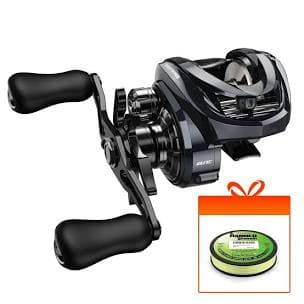 $229.99Product
KastKing Al-Ti Elite Baitcasting Reel | KastKing ALTI Baitcaster Reel | Aluminum Baitcaster Reel 7.2:1 / Right Handed
Searched for
Sports, Outdoor & FitnessOct 11, 2026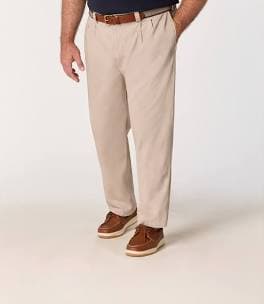 $60.00Product
DXL Big & Tall Waist-Relaxer Pleated Twill Pants in Khaki – Men’s Cotton Dress Pants Size 42 x 30
 DXL★★★★½ 4.6 (728)
Searched for
Fashion & FootwearOct 10, 2026

Questions and answers
Which industry has the most ads in Google AI Mode?
In our Oct 10–11, 2026 capture, home and furniture, with 330 ads on 13 answers, all product listings. It also showed ads most often in our ad capture, on 13 of 16 searches.
Do B2B and software companies get ads in AI Mode?
Yes, as text ads. Business software had 20 text ads from 20 advertisers on 11 answers, and IT security and dev tools 18 text ads. No answer in our capture held more than two.
Which industries rarely show AI Mode ads?
Telecom and internet (4 of 15 searches), education and careers (7 of 22) and media and entertainment (5 of 15) had the lowest rates in our ad capture.
Why do retail industries have so many more ads?
Their ads are product listings, which arrive in blocks: retail answers with ads averaged about 20 listings each. Service and software answers held one or two text ads.
Sources
- More opportunities for your business on Google Searchblog.google · May 21, 2025
- AI Mode in Google Search: Updates from Google I/O 2025blog.google · May 20, 2025
- About ads in AI-powered experiences in Google Search – Google Ads Helpsupport.google.com
- A new generation of ads for the AI era of Searchblog.google · May 20, 2026
- Google Opens AI Mode to Prescription Drug Ads – Adweekadweek.com · Oct 12, 2026
- Google AI Mode Now With Up To Four Ads – Search Engine Roundtableseroundtable.com · Nov 4, 2026
- AI Mode ad statistics – AI Mode Ad Libraryaimodeadlibrary.com
Figures from the library are in our capture (Oct 10–11, 2026, US searches) and describe what we observed, not Google’s full ad inventory. AI Mode Ad Library is independent and not affiliated with Google.