Analysis
Shopping ads in AI Mode: formats, tests and who shows up
Shopping ads in Google AI Mode as of Nov 2026: the formats Google is testing, 1,857 product listings from 518 stores we captured, and a feed checklist.
By the AI Mode Ad Library team · Published · Updated · 11 min read
In short
- Shopping ads reach AI Mode from existing Shopping and Performance Max campaigns and are built from Merchant Center data, not keywords; Google’s help page lists them as one of two formats that run there.
- In 2026 Google announced a sponsored retailer format and a Direct Offers pilot, and observers saw Sponsored stores in the product panel, an inline carousel, a “Sponsored” and “All products” split and a pack of products from local retailers.
- Google says click-through rates are already similar for sponsored and organic product list items within AI Mode, a claim limited to listings and to its US data from Aug 20 to Sept 3, 2026.
- Our Oct 10–11, 2026 capture held 1,857 product listings from 518 named stores on 89 answers; Walmart had the most, 89 on 35 answers, yet 297 stores appeared once.
- All 1,857 cards had a price, 89% a photo and 42% a star rating. Titles ran a median of 77 characters, past the 70 Google says shoppers usually notice.
On this page · 11 sections
How Shopping ads get into AI Mode
Shopping ads are product cards built from your Merchant Center data rather than from keywords; Google describes them as showing “a product photo, title, price, store name, and more”. Google’s help page for ads in AI Mode, read on Nov 16, 2026, says “Text ads and Shopping ads can appear within AI Overviews and AI Mode”, and existing Search, Shopping and Performance Max campaigns are eligible automatically, with no new campaign or separate budget. How ads work in AI Mode covers matching, bidding and reporting.
Google has added options aimed at conversational searches. AI Max for Shopping campaigns, in beta, is meant to connect ads with shoppers making “complex, conversational searches” and is built for newer experiences such as AI Overviews and AI Mode. It can serve rewritten product titles matched to the search (English feeds only), and its final URL expansion, which can also serve text ads from your feed, needs a Target ROAS bid strategy. By Google’s internal data, retail advertisers who turn it on typically see 5% more conversions or conversion value at a similar CPA or ROAS.
The products come from a very large pool. Google says AI Mode is powered by its Shopping Graph, which holds more than 50 billion product listings, 2 billion of them updated every hour. In November 2025 it named Wayfair, Chewy and Quince among the eligible US merchants as agentic checkout began rolling out on Search, including in AI Mode; all three placed product listings in our capture, with 68, 53 and 22 cards.
Shopping formats Google has announced
Sponsored retailer format (our label; Google has not named it). On Feb 11, 2026, Google wrote that AI Mode already surfaces organic shopping recommendations and that it was “testing a new ad format to showcase retailers that offer those products, clearly marked as sponsored”. Its illustration put the format below the organic results. Alphabet still described it as a test on April 29, 2026.
Direct Offers. A pilot introduced on Jan 11, 2026: retailers set up offers, such as a discount, in their campaign settings, and Google uses AI to decide when one is relevant to show, labeled “Sponsored deal”. Google’s Ads Liaison said it works alongside Performance Max and Standard Shopping campaigns. On May 20, 2026, Google said it had added native checkout for Universal Commerce Protocol merchants, listed Gemini-built promotion bundles as coming soon, and said Direct Offers “will now naturally surface in the AI Mode response as shoppers explore options”.
Local inventory ads. Google’s help page lists local inventory ads, with vehicle ads, among the “other types of ads” it is experimenting with beyond text and Shopping ads. It gives no detail on how they look in AI Mode.
AI-powered Shopping ads are something else. Google announced them on May 20, 2026 for Search “in the coming months”, with Gemini writing “a custom explainer highlighting why your product may be the right choice for them”, and presented them apart from its AI Mode formats. The ad formats guide lists the AI Mode formats Google has named or announced, with their status.
Shopping layouts spotted in AI Mode
Search marketers have also posted Shopping layouts Google did not announce. They show what Google is trying, not what every shopper sees, and the date is when each was first posted, not proof of when a test began.
| Seen | Layout | Seen by | Google’s response |
|---|---|---|---|
| March 25, 2026 | “Sponsored stores” in the product panel that opens when you click a product in an answer, above the organic “All stores” list | Glenn Gabe | No unit by this name announced |
| May 24–25, 2026 | Single sponsored products mixed into AI Mode’s product lists; before, Brodie Clark wrote, sponsored results showed only at the end of the response | Brodie Clark (SERP Alert) | None reported |
| Aug 28 and 30, 2026 | A carousel of Shopping ads inside the answer, with another ad unit at the bottom; then a single inline unit with a carousel at the bottom | Brodie Clark (SERP Alert) | No comment, per PPC Land |
| Oct 28, 2026 | One “Sponsored” heading over the paid products in a carousel, which lost their own tags, and “All products” over the unpaid ones | Sachin Patel | Confirmed as an experiment on Oct 29 |
| Nov 12, 2026 | A “Sponsored” pack of products “available from local retailers” under the answer, plus sponsored stores in the product panel | Glenn Gabe | Format not named |
Google’s comment on the October test also says where Shopping ads can appear in AI Mode: “Yes, this format is part of our ongoing experiments with ads in AI Mode. Shopping Ads can appear alongside organic visual search results within carousels for commercially relevant queries. All sponsored listings are labeled as ‘Sponsored’.” In the published examples, though, the paid cards under the shared heading had lost their own tag.
The local retailer pack came with its own AI explainer: “If you’re exploring these walking models, here are some options available from local retailers.” Only two of its four cards showed a location. It fits the local inventory ads experiment on Google’s help page, but Google has not named the format. The same day, Juozas Kaziukėnas of Marketplace Pulse counted four different sponsored placements in one AI Mode response: a sponsored retailer in the answer, a sponsored store in the product panel, a sponsored product in a product list and ads at the bottom.
What Google says about clicks
On Oct 28, 2026, Google said people “are comfortable with ads in AI Mode” and that “click-through rates are already similar between sponsored and organic product list items within AI Mode.” Read the scope closely. The claim covers product list items, not text ads, and compares paid with unpaid listings inside AI Mode, not AI Mode ads with ads on the classic results page. It rests on Google’s internal US data from Aug 20 to Sept 3, 2026, and Google published no rates. PPC Land noted that the window overlaps the late-August carousel test.
What the product rows looked like in our capture
Product listings appeared on 89 of the 197 answers with ads in our Oct 10–11, 2026 capture, nearly always without text ads beside them. A row held a median of 16 cards and as many as 40; 35 rows had 30 or more. A row usually mixed stores, a median of 7 and up to 27 on women’s winter boots. The capture came before the “Sponsored” and “All products” headings and the local retailer pack were spotted.
| What the card showed | Listings | Share |
|---|---|---|
| A price | 1,857 | 100% |
| A store name | 1,853 | 99.8% |
| A photo | 1,649 | 89% |
| A star rating and review count | 780 | 42% |
Prices ran from a few cents to tens of thousands of dollars, with a median of $112 and half of all listings between $43 and $350. On pet gate the first card was a $39.99 Frisco steel gate from Chewy; on window ac unit it was a $308 Frigidaire 12,000 BTU unit from Walmart. Stars were shown whatever the score: the median rating was 4.5, but 121 of the 780 rated cards showed fewer than 4 stars, such as a Petco pet gate at 3.3.
Above most rows sat an AI explainer, the line Google’s Gemini models write to introduce the ads, often naming the models discussed in the answer: “Here are some NOCO Boost models to consider, including the HD GB70 and other options for heavy-duty vehicles” on noco boost. Of the 86 answers with only product listings, 59 had an explainer written for the question, 15 the static header “You might consider these related products:” and 12 none we could read. When the explainer names a model, the listing whose title carries that model name is the one that fits. The AI explainers guide has the full analysis.
Who filled the rows
| Store | Listings | Answers | Mostly in |
|---|---|---|---|
| Walmart | 89 | 35 | Consumer Electronics |
| Wayfair | 68 | 19 | Home & Furniture |
| Chewy | 53 | 10 | Pets |
| Temu | 51 | 20 | Pets |
| Target | 41 | 20 | Food & Grocery |
| Lowe’s | 39 | 13 | Home Improvement |
| Thrive Market | 39 | 1 | Food & Grocery |
| KastKing | 38 | 1 | Sports, Outdoor & Fitness |
| Best Buy | 37 | 14 | Consumer Electronics |
| DXL | 35 | 1 | Fashion & Footwear |
| Pura | 35 | 1 | Home & Furniture |
| Petco | 31 | 7 | Pets |
| Home Depot | 29 | 16 | Home Improvement |
Two kinds of store rose to the top. Generalists spread across many answers: Walmart appeared on 35 of the 89 answers with product listings, Target and Temu on 20 each, Home Depot on 16. Brands filled or nearly filled one row on their own name: Thrive Market, KastKing, DXL and Pura each placed 35 or more cards on a single search. Below them the field was wide. The ten biggest stores held 26% of all listings, and 297 of the 518 stores appeared exactly once.
None of the 1,853 product listings with a store name came from Amazon. The listings were recorded in our ad capture, searches run in a browser, where the ads on the page are recorded. Separately, in our answer capture, a second set of searches that recorded the AI answer and the sources it linked, but picked up ads on almost none of them (2 of 323), AI Mode cited amazon.com as a source on 3 questions, walmart.com on 5 and bestbuy.com on 3. Our ad capture recorded no cited sources, and our answer capture recorded ads on only 2 of its 323 searches, so this data cannot show how often a cited source and an ad appear on the same search. The sources guide covers what the answers cite.
Brand searches and category searches
Whether the search named a brand changed the row. On 10 searches that named a brand, the brand’s own store had the first card. Some rows were the brand alone: Cove had all 15 on cove security and Pura all 35 on pura diffuser. KastKing came close, with 38 of 39 on kastking reel; Walmart had the other. Others mixed in resellers: on birkenstock boston, Birkenstock had 4 of 8 cards beside REI, Massey’s, DSW and L.L.Bean.
Taking part did not guarantee the first card. On wusthof classic, Wüsthof’s own store had 9 of 19 cards but Cutlery and More had the first; on ring doorbell, Ring had 6 of 11 and QVC the first. Where the brand placed no listings at all, retailers took the whole row: on brooks ghost 17 the first card came from DSW.
Category searches were open contests. window ac unit brought 40 cards from 18 stores, with Frigidaire’s own store holding 7. cabin tent brought 39 from 23 stores. A store named after the category could still dominate: TVLiftCabinet held 27 of 39 cards on tv lift cabinet.
Seven industries held 89% of all listings: Home & Furniture 330, Fashion & Footwear 254, Home Improvement 241, Sports, Outdoor & Fitness 232, Pets 225, Food & Grocery 193 and Consumer Electronics 178. Food included gift delivery: smoked turkey delivery brought 39 cards, led by Burgers’ Smokehouse and Goldbelly.
Feed and campaign checklist
- Fill every required field. Each product needs an ID, title, description, link, image link, availability and price under Google’s product data specification; new products also need a brand (books, films and music aside), and used or refurbished ones a condition.
- Front-load the title. Google allows 150 characters but says shoppers “will usually notice only the first 70 or fewer”. 1,072 of the 1,857 titles in our capture ran longer than 70. “Frigidaire 12,000 BTU Window Air Conditioner” puts brand, capacity and product in 44 characters.
- Match your landing pages. Google’s help page for ads in AI Mode asks for product data that matches your landing pages, with descriptive titles and descriptions, multiple high-resolution product and lifestyle images, accurate prices and sale prices, product ratings and highlights, and clear shipping and return policies.
- Add conversational attributes where they help. Question and answer, related product, document link and popularity rank are optional attributes meant for surfaces such as AI Mode; Google says they won’t affect your products’ approval.
- Cover your brand searches. Keep your own products in an active Shopping or Performance Max campaign so your listings compete when people search your brand; in our capture, retailers filled the row where the brand placed none.
- Trial AI Max for Shopping on part of the catalog. Check the rewritten titles in its product titles report before scaling, and remember that text customization works on English feeds only.
- Prepare offers and local data. If you are in the Direct Offers pilot, decide which discounts you are willing to show; if you sell in stores, keep local inventory data current, since Google lists local inventory ads among its AI Mode experiments.
- Watch share of voice. In Merchant Center, AI performance insights sets your products’ visibility on conversational shopping questions in AI Mode and AI Overviews against competitors’ average. It counts organic listings only, not ads. It covers English-language queries and is available to Merchant Center accounts in the US, Australia, Canada, India and New Zealand.
- Compare with the library. Each industry report exports every listing with its price and the AI explainer, and the brand check finds your store among the 518.
Examples from the library
4 of the ads on searches this guide links to, in our capture (Oct 10–11, 2026, US searches). Each card shows the search that brought it.
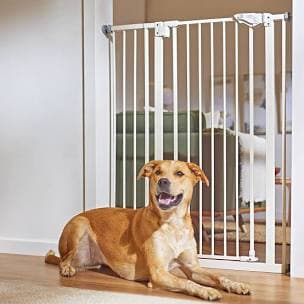 $39.99Product
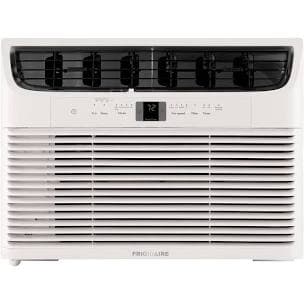 $308.00Product
Frigidaire 12,000 BTU Window Air Conditioner
 Walmart★★★★ 4.2 (423)
Searched for
Home ImprovementOct 11, 2026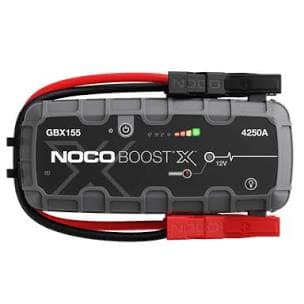 $369.95Product
NOCO Boost X GBX155 Jump Starter 4250A 12V – For Trucks, Diesel Trucks, SUVs, & RVs Portable Emergency Battery Booster Jump Box With Power Bank
Searched for
AutomotiveOct 11, 2026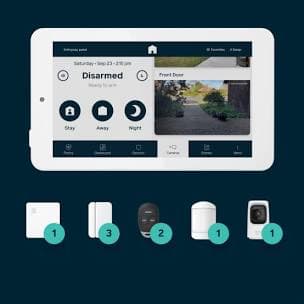 $114.87Product
Home Security System | DIY Wireless Alarm System for Home with Sensors, Cameras, Fire & Motion Alerts | No Contract | Cove
Searched for
Local Home ServicesOct 10, 2026


Questions and answers
Do Shopping ads appear in AI Mode?
Yes. Google’s help page, read on Nov 16, 2026, says text ads and Shopping ads can appear within AI Mode, and existing Shopping and Performance Max campaigns are eligible automatically. 1,857 of the 2,036 ads in our Oct 10–11, 2026 capture were product listings.
Do I need a different product feed for AI Mode?
No. The same Merchant Center feed serves AI Mode. Google has added optional conversational attributes, such as question and answer, that it says are meant for surfaces like AI Mode and won’t affect approval.
How many product ads can one AI Mode answer show?
Up to 40 in our capture. Across the 89 answers with product listings the median was 16, and 35 answers showed 30 or more. Other layouts have been reported too: before our capture, Shopping ads inside the answer as a carousel or a single unit (posted Aug 28 and 30, 2026), and since it, a pack of products from local retailers under the answer (Nov 12, 2026).
Do sponsored listings in AI Mode get as many clicks as organic ones?
Google says click-through rates are already similar between sponsored and organic product list items within AI Mode, based on its internal US data from Aug 20 to Sept 3, 2026. It published no rates, and the claim does not compare AI Mode with the classic results page.
Did Amazon show product ads in AI Mode?
Not in our capture: none of the 1,853 product listings with a store name came from Amazon. Separately, in our answer capture, AI Mode cited amazon.com as a source on 3 questions. Our ad capture recorded no cited sources, and our answer capture recorded ads on only 2 of its 323 searches, so this data cannot show how often a cited source and an ad appear on the same search.
Sources
- About Shopping ads – Google Ads Helpsupport.google.com
- About ads in AI-powered experiences in Google Search – Google Ads Helpsupport.google.com
- About AI Max for Shopping campaigns (beta) – Google Ads Helpsupport.google.com
- Ads in AI Mode expand to new marketsblog.google · Oct 28, 2026
- A new generation of ads for the AI era of Searchblog.google · May 20, 2026
- What to expect in digital advertising and commerce in 2026blog.google · Feb 11, 2026
- New tech and tools for retailers to succeed in an agentic shopping erablog.google · Jan 11, 2026
- Alphabet Q1 2026 earnings call transcripts206.q4cdn.com · Apr 29, 2026
- Let AI do the hard parts of your holiday shoppingblog.google · Nov 13, 2025
- Google AI Mode Direct Offers Ads & Universal Commerce Protocol – Search Engine Roundtableseroundtable.com · Jan 12, 2026
- Sponsored Stores Spotted in AI Mode As Google Expands Ads Across AI Surfaces – Search Engine Roundtableseroundtable.com · Mar 26, 2026
- Google Shopping Ads In AI Mode Tries New Styles? – Search Engine Roundtableseroundtable.com · May 26, 2026
- Google AI Mode With Inline Shopping Carousel Ads & Single Ad Unit – Search Engine Roundtableseroundtable.com · Aug 31, 2026
- Google tests two shopping ad placements inside AI Mode results – PPC Landppc.land · Sep 6, 2026
- Google AI Mode Tests Blending All Products With Sponsored Products – Search Engine Roundtableseroundtable.com · Oct 29, 2026
- Advertisers in 10 more countries can’t opt out of Google’s AI Mode ads – PPC Landppc.land · Nov 1, 2026
- Google AI Mode gains local retailer ads after Search growth slows to 12% – PPC Landppc.land · Nov 12, 2026
- Product data specification – Google Merchant Center Helpsupport.google.com
- Title [title] and structured title [structured_title] – Google Merchant Center Helpsupport.google.com
- How to use conversational attributes – Google Merchant Center Helpsupport.google.com
- About AI performance insights – Google Merchant Center Helpsupport.google.com
Figures from the library are in our capture (Oct 10–11, 2026, US searches) and describe what we observed, not Google’s full ad inventory. AI Mode Ad Library is independent and not affiliated with Google.