Playbook
Getting your ads into Google AI Mode: a five-step playbook
How to get ads into Google AI Mode: eligible campaigns, how Google matches them, searches that showed ads in our capture, copy and feed fixes, and how to check.
By the AI Mode Ad Library team · Published · Updated · 10 min read
In short
- You can’t buy AI Mode on its own: Google says existing Search, Shopping and Performance Max campaigns are eligible automatically, with no new campaign or separate budget.
- Matching decides your reach: AI Max, broad match, Shopping and Performance Max can be matched to the AI’s answer as well as the search, while exact and phrase match only reach searches with direct commercial intent.
- In our ad capture, searches run in a browser, where the ads on the page are recorded, 196 of 341 short product and keyword searches (57%) showed ads on Oct 10–11, 2026.
- No answer in that capture held more than two text ads, and the two advertisers with the most text ads were lead sites, Angi with 4 and Insurify with 3; an answer with four ads was reported on Nov 4, 2026.
- For retailers the feed is the ad: all 1,857 product listings we captured showed a price, 89% a photo and 42% a star rating.
On this page · 8 sections
Step 1: Use campaigns that can reach AI Mode
You don’t opt in to AI Mode, and you can’t buy it on its own. Google’s help page for ads in AI Overviews and AI Mode says existing Search, Shopping and Performance Max campaigns are automatically eligible, with no new campaign or separate budget, and that you can’t target AI Mode exclusively or opt out of it separately from Search. Text ads and Shopping ads can appear there, and Google says it is experimenting with local inventory ads and vehicle ads. If you are new to the format, our guide to Google AI Mode ads shows what they look like.
Eligible is not the same as matched. Google matches an ad in AI Mode either directly to a search that already shows clear commercial intent, such as “pool vacuum cleaners”, or contextually to both the question and the AI’s response, when a longer question such as “why is my pool green and how do I clean it?” leads to a commercial next step. AI Max for Search, broad match, Shopping and Performance Max are eligible for both. Exact and phrase match keywords are eligible only for the direct kind. So the first job is an audit of what you already run.
| If you run | Do this | Why |
|---|---|---|
| Search, exact and phrase match only | Add broad match or turn on AI Max search term matching, starting with one campaign | Exact and phrase match reach AI Mode only when the search itself shows direct commercial intent, not through the AI’s answer |
| Search with broad match | Bid with conversion-based Smart Bidding and keep the budget from capping out | Google calls Smart Bidding “critical” with broad match, and its AI Mode help page advises flexible budgets on high-performing campaigns |
| Search with campaign-level broad match or automatically created assets | Check whether the scheduled upgrade has turned on AI Max, and which features | Google said it would upgrade these campaigns to AI Max automatically from September 2026, with search term matching on, plus text customization for automatically created assets |
| Shopping | Keep the Merchant Center feed complete; consider AI Max for Shopping (beta) | Google says the beta is built for newer search experiences such as AI Overviews and AI Mode |
| Performance Max | Keep text assets and the feed current; review text customization and final URL expansion | Eligible for both kinds of matching, and named by Google in May 2026 as a foundation for its new AI Mode formats |
| Dynamic Search Ads | Plan the move to AI Max | Google’s automatic DSA upgrade begins in February 2027 |
Both rules have a history. When Google began testing ads in AI Mode in May 2025, it named Performance Max, Shopping and Search campaigns with broad match, including AI Max, as eligible. In September 2026 its Ads Liaison, Ginny Marvin, called exact and phrase match in AI Mode “a small experiment”, limited to cases with “explicit and direct user intent”; the help page now describes the same limit. Where you advertise matters too. As of Nov 16, 2026, Google lists ads within AI Mode in English only, in the US, Australia, Canada, India, Kenya, Malaysia, New Zealand, Nigeria, Pakistan (text ads only), the Philippines and Singapore, and notes that the list may not be exhaustive. It plans to add Brazil, Mexico and the UK in the fourth quarter of 2026; they were not on the list when we checked.
Step 2: Cover the searches that carry ads
Our ad capture ran 341 short product and keyword searches in a browser, where the ads on the page are recorded, on Oct 10–11, 2026: 196 showed ads, 57%. Two-word searches showed them on 97 of 163 and three-word searches on 89 of 149; single words, often a bare brand name, on 8 of 27. Questions written as full sentences ran only in our answer capture, a second set of searches that recorded the AI answer and the sources it linked, but picked up ads on almost none of them (2 of 323), so their ad rate was not measured. The guide to which searches trigger ads has the detail.
Topic mattered as much as length. In the ad capture, Home & Furniture showed ads on 13 of 16 searches, Pets on 12 of 15 and Small Business Tools on 12 of 16, while Telecom & Internet did on 4 of 15. SE Ranking’s study of 50,032 commercial US keywords (data from June 30, 2026) points the same way on price: keywords with a cost per click of $10 or more showed an AI Mode text ad 53.56% of the time, against 24.33% under $2.
Follow-up questions now count as well. On Oct 28, 2026 Google announced multiturn ads in the US, which let ads appear on follow-up questions in an AI Mode conversation, and its help page says ads can appear “across follow-up questions in AI Mode”. Search Engine Roundtable reported on Nov 9 that it had seen them live on Nov 6. Every search in our October capture was a single question, so the rates above describe first answers only.
Four kinds of search carried most of the ads:
- A service plus an intent word. car insurance quotes, tile installer, ac replacement: one or two text ads, often from lead sites such as Angi, Thumbtack, NerdWallet and Insurify, sometimes beside a local firm.
- A product category. window ac unit, pet gate, cabin tent: rows of up to 40 product listings.
- A brand name. On birdeye and deel review only rivals advertised. The competitor guide lists more.
- An “alternatives” search. CorelDRAW on canva alternatives, Ramp and Rippling on concur alternatives.
Step 3: Write text ads that follow the AI explainer
Text ads had little room in our capture. No answer had more than two: 68 had two and 43 had one. The two advertisers that won the most of those slots collect leads for many businesses: Angi placed 4 text ads and Insurify 3, while NerdWallet and Thumbtack, in the same line of business, placed 2 each. A local business is usually up against one of them. The space may be growing: on Nov 4, 2026 Search Engine Roundtable reported, from one screenshot posted by Search Engine Watch, an AI Mode answer with four ads, and Google has not said how often that happens.
Your ad also sits under text you didn’t write. Google’s help page calls it an AI explainer: concise text from its Gemini models that can introduce a group of Sponsored options, or add context from the search, the AI response and public sources, including your website. Advertisers can’t write, edit, approve or opt out of it, and some placements show a static header such as “You might consider these options” instead. In our capture, 161 of the 197 answers with ads had a line written for the question, 24 a stock line and 12 none.
On general liability insurance Google’s AI wrote “To get a quote for a general liability policy that fits your business, you can explore these options.” The two ads under it answered that promise directly: biBerk with “General Liability Insurance - Buy Policy Online in 5 Minutes” and Hiscox with “General Liability Insurance - Coverage from $30*/Month”. Across our capture, 136 of 179 text-ad headlines repeated a main word from the search, 17 named a dollar amount, usually a starting price, and 16 offered something free.
- Name what was searched in the first headline. Thumbtack’s headline on tile installer, “Affordable Tile Work - Tile Installation Services - Expert Installation”, reads as an answer to the search, not an interruption.
- Give one concrete number. A price, a time or a count: “Walks as low as $13.50” (Wag on dog walker).
- Land on the action the sentence names. If the AI says “get a quote” or “connect with local professionals”, the page should open on that form.
- Keep your site clear and current. You can’t edit AI explainers, but Google says clear, up-to-date website content helps it surface accurate context in them.
- Fence in rewritten copy. If AI Max text customization is on, Google’s text guidelines allow up to 25 term exclusions and 40 messaging restrictions per campaign.
- Preview before you spend. Paste your headline into the ad preview to see it under a real AI Mode sentence.
Step 4: For retailers, fix the feed
Shopping ads use Merchant Center product data, not keywords, to decide where they show, so the feed decides what can appear. Our capture held 1,857 product listings on 89 answers, a median of 16 per answer and up to 40. Every listing showed a price, 1,649 (89%) a photo and 780 (42%) a star rating. Titles had a median of 77 characters; Google’s title guidance says shoppers “will usually notice only the first 70 or fewer characters”.
Google’s AI Mode help page spells out what a complete feed means for these ads: product data that matches your landing pages, descriptive titles and descriptions, multiple high-resolution product and lifestyle images, accurate prices and sale prices, product ratings and highlights, and clear shipping and return policies. Google also says click-through rates are already similar between sponsored and organic product list items within AI Mode, from its internal US data for Aug 20 to Sep 3, 2026; that compares product listings only, not text ads, and not AI Mode against the classic results page.
- Complete the required attributes. Google’s product data specification requires an ID, title, description, link, image link, availability and price for every product, plus a brand for most new products and a condition for used or refurbished ones.
- Front-load titles. Brand, product type and the attribute people filter on, within the 150-character limit.
- Add conversational attributes where they help. Merchant Center accepts six optional conversational attributes, among them question and answer, related product, document link and popularity rank, to help AI-driven surfaces such as AI Mode understand your products. Google says they won’t affect your products’ approval.
- Own your brand searches. On dxl clothing every one of the 35 listings was DXL’s own, and KastKing had 38 of 39 on kastking reel.
- Try AI Max for Shopping with care. The beta rewrites product titles for the search (English feeds only), and its final URL expansion requires a Target ROAS bid strategy.
The Shopping ads guide shows which stores filled the rows and how brand and generic searches differed.
Step 5: Check that it is working
Google doesn’t report AI Mode on its own. Its help page says results from ads in AI Overviews and AI Mode are included in aggregate in your standard campaign reports, as impressions, clicks, conversions and cost, and in the search terms report. No single report will confirm you are there, so use several partial views:
- The search terms report. AI Max matches show “AI Max” as the match type, with a source column that says whether broad match or keywordless matching found them. For searches in AI Mode, AI Overviews, Lens or autocomplete, Google says the term shown “represents the best approximation of the user’s intent”.
- Merchant Center’s AI performance insights. Share of voice on conversational shopping queries in AI Mode and AI Overviews. It covers English-language queries and is available to Merchant Center accounts in the US, Australia, Canada, India and New Zealand. It counts organic listings only, so it shows whether your products surface, not your ads.
- Experiments. Google’s one-click AI Max experiments split a campaign 50/50, so you can test the upgrade on part of its traffic instead of switching it all at once.
- Dated samples. Look your brand up in the brand check, follow your terms with alerts, and export your industry from a report to compare editions. The measuring guide covers test plans and trackers.
Everything from our capture is a sample: signed-out US searches on Oct 10–11, 2026, on questions we chose, each asked once with no follow-up. Read every count as “at least”.
Examples from the library
4 of the ads on searches this guide links to, in our capture (Oct 10–11, 2026, US searches). Each card shows the search that brought it.
“To get a personalized quote based on your specific details, you can compare rates from different insurance companies.”
 NerdWalletSponsored
Side-By-Side Comparison
Compare Rates in 2 Minutes Discover how much you could save on car insurance. Get multiple quotes in minutes!
Searched for
InsuranceOct 10, 2026“To connect with local professionals for your project, you can use these services.”
 AngiSponsored
Average Cost:Tile Pros - Affordable Tile Services - Just Enter Your Zip
Enter your zip code & share the details of your project to connect with local pros fast.
Searched for
Local Home ServicesOct 10, 2026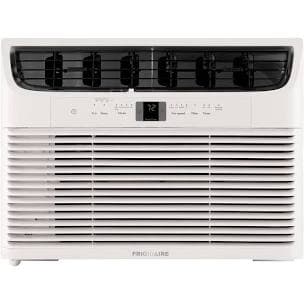 $308.00Product
Frigidaire 12,000 BTU Window Air Conditioner
 Walmart★★★★ 4.2 (423)
Searched for
Home ImprovementOct 11, 2026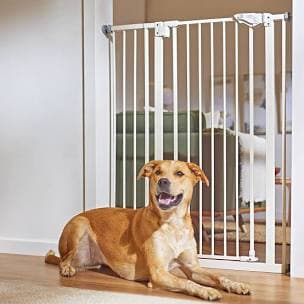 $39.99Product

Questions and answers
Is there a separate campaign type for AI Mode?
No. Google’s help page says existing Search, Shopping and Performance Max campaigns are automatically eligible, with no new campaign or separate budget, and that you can’t target AI Mode on its own or opt out of it separately from Search.
Do exact and phrase match keywords reach AI Mode?
On direct searches only. Google’s help page says exact and phrase match keywords are eligible when the search expresses direct commercial intent, such as “pool vacuum cleaners”, but not for contextual matching on broader questions. Google’s Ads Liaison described this as a small experiment in September 2026.
Which countries show ads in AI Mode?
As of Nov 16, 2026, Google’s help page lists the US, Australia, Canada, India, Kenya, Malaysia, New Zealand, Nigeria, Pakistan (text ads only), the Philippines and Singapore, in English, and says the list may not be exhaustive. Google plans to add Brazil, Mexico and the UK in the fourth quarter of 2026.
Will a higher bid get my ad into AI Mode?
Not on its own. Google says ads in AI Mode use the same auction and the same cost-per-click or conversion-based bidding as other Search ads, with no extra charge, and for its Highlighted Answers format it says “highly relevant, high-quality ads” are eligible. SE Ranking did find that higher-CPC keywords showed AI Mode text ads more often.
Does advertising help my site get cited in AI Mode answers?
No. Google says buying ads doesn’t influence organic AI answers, and that whether your site is cited organically doesn’t affect your ad’s eligibility in the auction.
Can a small business get into AI Mode?
Yes. In our capture, 297 stores appeared with a single product listing, and local firms such as AAction Air in Savannah shared the ac replacement answer with Trane.
Sources
- About ads in AI-powered experiences in Google Search – Google Ads Helpsupport.google.com
- Ads in AI Mode expand to new marketsblog.google · Oct 28, 2026
- More opportunities for your business on Google Searchblog.google · May 21, 2025
- A new generation of ads for the AI era of Searchblog.google · May 20, 2026
- Google Ads Tests Serving Search Ads With Restrictive Match Types In AI Mode – Search Engine Roundtableseroundtable.com · Sep 4, 2026
- Google AI Mode Multiturn Ads Are Live - Follow-Up Query Ads – Search Engine Roundtableseroundtable.com · Nov 9, 2026
- Google AI Mode Now With Up To Four Ads – Search Engine Roundtableseroundtable.com · Nov 4, 2026
- About keyword matching options – Google Ads Helpsupport.google.com
- Set up AI Max for Search campaigns – Google Ads Helpsupport.google.com
- How AI Max for Search campaigns works – Google Ads Helpsupport.google.com
- About ad group and asset group prioritization within a Google Ads account – Google Ads Helpsupport.google.com
- We’re upgrading Dynamic Search Ads to AI Maxblog.google · Apr 15, 2026
- About AI Max for Shopping campaigns (beta) – Google Ads Helpsupport.google.com
- Use text guidelines with Performance Max and Search campaigns (beta) – Google Ads Helpsupport.google.com
- About Shopping ads – Google Ads Helpsupport.google.com
- Product data specification – Google Merchant Center Helpsupport.google.com
- Title [title] and structured title [structured_title] – Google Merchant Center Helpsupport.google.com
- How to use conversational attributes – Google Merchant Center Helpsupport.google.com
- About AI performance insights – Google Merchant Center Helpsupport.google.com
- About the “Experiments” page – Google Ads Helpsupport.google.com
- AI Mode now shows ads on nearly 1 in 3 commercial queries – SE Rankingseranking.com · Jul 14, 2026
Figures from the library are in our capture (Oct 10–11, 2026, US searches) and describe what we observed, not Google’s full ad inventory. AI Mode Ad Library is independent and not affiliated with Google.